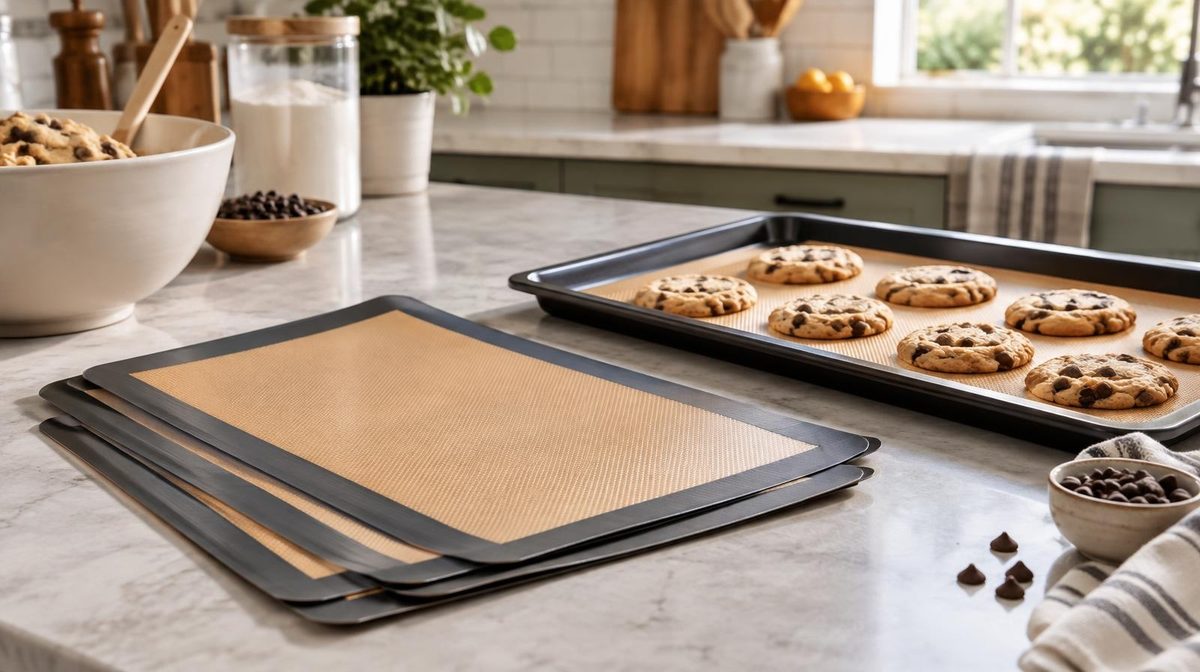
Marcus sells a $32 silicone baking mat set. In September his ads spent $3,000 and brought in $12,000 in sales, a 25% ACoS against a 38% break-even. So in October he did what every forum told him to do: he doubled his budgets and raised every bid by 40%.
October ad spend: $6,000. Ad sales: $16,800. ACoS: 35.7%, still under break-even. Marcus was happy for about a week, until he worked out the profit. September's ads left him $1,560 after ad costs. October's left him $384.
He spent $3,000 more to make $1,176 less. And his ACoS never once crossed the line he was watching.
That's the trap at the center of learning how to scale Amazon PPC. Your blended ACoS averages the cheap sales you already had with the expensive sales you just bought, so it hides the moment extra spend stops paying. This guide shows you the number that catches it, the signals that say you're ready to scale, the order to pull each lever in, and how fast to go.
What Scaling Amazon PPC Actually Means
Scaling isn't “spend more.” Anyone can spend more. Scaling means increasing ad spend while every extra dollar still earns more than it costs.
There are only three ways to do it:
- Win more of the auctions you're already in. Higher budgets, higher bids, better placements on keywords that already convert.
- Enter new auctions. New keywords, new match types, competitor ASINs, new ad types.
- Add more to sell. New ASINs, new variations, new marketplaces.
The first is the cheapest and the safest. The third is the biggest but the slowest. Most sellers who scale Amazon PPC badly skip straight to the most expensive option in the first group, which is raising every bid at once, the way Marcus did.
Are You Ready to Scale? Five Signals
Scaling a campaign that isn't ready just buys losses faster. Check these five things first.
1. Your ACoS has headroom below break-even. Break-even ACoS is your profit margin before ad costs. If you're at 33% against a 35% break-even, there's no room to buy more expensive clicks. You want at least 5 to 10 points of space. Our good ACoS benchmarks guide shows how to calculate your target.
2. Your winners are running out of budget. A campaign with a 20% ACoS that runs out of budget at 3 PM is leaving the evening's sales to competitors. Check the campaign's budget status and the out-of-budget hours in Campaign Manager. This is the clearest scaling signal there is.
3. You have low impression share on terms that convert. If an exact-match keyword converts at 14% and you're only winning a small share of its top-of-search impressions, there's more volume to buy. Amazon shows this in the Sponsored Products search term impression share report.
4. Your inventory can take it. Scaling into a stockout is worse than not scaling. Losing sales velocity costs you organic rank, and you'll pay to rebuild it later. Make sure you have at least 60 days of cover at the higher sales rate. Our inventory management guide covers the math.
5. Your listing converts reliably. A rating of 4.0 or higher, a Buy Box you hold close to 100% of the time, and a stable conversion rate. Ads multiply whatever your listing already does. If it converts at 6%, scaling multiplies a weak number.
If two or more of these fail, fix them first. If you have the opposite problem, with campaigns that won't spend their budget at all, start with our guide to Amazon ads not spending budget instead.
The Number That Decides Every Scaling Move: Marginal ACoS
Blended ACoS tells you what all your spend did on average. Marginal ACoS tells you what the extra spend did. When you scale, that's the only question that matters.
Marginal ACoS = (new spend − old spend) ÷ (new ad sales − old ad sales)
Run Marcus's numbers through it. He added $3,000 in spend and got $4,800 in extra sales. That's a marginal ACoS of 62.5%. Every new dollar lost money, because his break-even was 38%. His blended ACoS of 35.7% just averaged that loss into his profitable September base.
Now look at a seller who scaled in steps. Priya sells a $45 no-pull dog harness with a 40% break-even ACoS. She raised spend by about 20% each time and measured after each step:
| Step | Ad spend | Ad sales | Blended ACoS | Marginal ACoS |
|---|---|---|---|---|
| Baseline | $2,000 | $8,000 | 25.0% | — |
| Step 1 (+20%) | $2,400 | $9,400 | 25.5% | 28.6% |
| Step 2 (+20%) | $2,880 | $10,900 | 26.4% | 32.0% |
| Step 3 (+20%) | $3,460 | $12,100 | 28.6% | 48.3% |
Look at the last row. Blended ACoS is 28.6%, which looks excellent against a 40% break-even. But the $580 she added in step 3 bought only $1,200 in sales. That's 48.3% marginal ACoS, so those dollars lost money. Priya rolled step 3 back and kept step 2. Her blended ACoS would never have told her to.
Include organic lift, but carefully
Ad sales aren't the whole story. More ad sales raise your sales velocity, and that can lift organic rank. So the full version of the test uses total sales:
Marginal TACoS = (new spend − old spend) ÷ (new total sales − old total sales)
If Priya's organic sales also rose by $600 during step 3, her extra total sales were $1,800 and her marginal TACoS was 32.2%, under break-even. That would justify keeping the step.
The catch is that organic lift is slow and noisy. It can take two to four weeks to show, and seasonality moves it too. Use it to keep a borderline step you've watched for a few weeks, not to justify a bad one after three days. Our TACoS guide explains how to track it.
The Scaling Ladder: Seven Levers in Order of Risk
Pull these in order. Each one costs more or adds more uncertainty than the one before, so you only climb when the cheaper levers run out.
1. Lift the budget caps on your winners
This is the safest move in Amazon PPC. You're not changing which auctions you enter or what you pay. You're just staying in them for more hours of the day. Raise the budget on any campaign with ACoS below target that runs out of budget before midnight. Raise it by enough that it stops running out, then check that ACoS holds.
2. Raise bids on proven exact-match keywords
Start with exact-match keywords that have at least 10 orders over the last 30 days and an ACoS below target. Raise them 10 to 15% at a time, never 40% across the board.
Before you raise, know your ceiling. Your max CPC is:
Max CPC = price × conversion rate × target ACoS
For Marcus that's $32 × 12% × 30% = $1.15. If a keyword already costs $1.10 a click, there's almost no room left, however good it looks. Our bid strategy guide covers bid ladders by match type.
3. Push top-of-search on the campaigns that convert there
Top of search usually converts best, and it's where most of the volume on a keyword sits. Check the placement report. If a campaign converts better at top of search than elsewhere, add a top-of-search adjustment of 20 to 30%, then scale from there.
Watch out for stacking: a 50% placement adjustment on top of “up and down” dynamic bidding can double your bid on that placement. Our placements guide explains how they combine.
4. Harvest search terms and widen discovery
Now you're entering new auctions. Pull the search terms that converted in your auto and broad campaigns, add them as exact match with their own bids, and negate them in the source campaign. Then add phrase and broad match on your best roots to find the next round.
This is how you scale Amazon PPC without paying top dollar for the same head terms. The keyword harvesting guide walks through the full loop.
5. Target competitor ASINs and categories
Product targeting lets you show up on competitor detail pages. It works best against products with a higher price, a lower rating or fewer reviews than yours, where a shopper has a reason to switch. Start with the ASINs that already show up as converting targets in your auto campaigns. Our ASIN targeting guide covers how to choose them.
6. Add new ad types
Once Sponsored Products is saturated, add the other formats. Sponsored Brands and Sponsored Brands video reach shoppers at the top of results with your logo and several products. Sponsored Display retargets people who viewed your listing and didn't buy.
These usually scale at a higher ACoS than exact-match Sponsored Products, so give them their own target and judge them on marginal numbers too.
7. Add products and marketplaces
The biggest lever is more things to advertise. New variations, bundles, complementary products, or the same product in a new marketplace.
Tomás sells a $79 manual coffee grinder. By spring his US campaigns had hit 60% top-of-search impression share on his main terms, and every further bid raise came back with a marginal ACoS above 45%. The US was saturated.
So he launched on Amazon.de. Within three months, German ads were spending $1,800 a month at a 27% ACoS, a new pool of auctions that cost far less than squeezing more out of the US. Our global selling guide covers how to expand.
How Fast Should You Scale Amazon PPC? The 20% Rule
Big jumps break campaigns in two ways. They hide which change caused what, and they push you into expensive auctions all at once. Small steps let you measure each one.
- Raise spend 15 to 25% per step. That's big enough to see a result and small enough to roll back cheaply.
- Change one lever per campaign per step. Budget or bids or placements, not all three at once.
- Wait at least 7 days before judging. Amazon keeps attributing orders to clicks for days after they happen, so the last 2 to 3 days of data always look worse than they are. For low-volume products, wait 14 days.
- Compare like with like. Measure each step against the period just before it, and watch for days of the week that skew results.
- Roll back any step with a marginal ACoS above break-even. Keep the steps that pass.
At 20% per step and one step a week, you can grow spend by about 2x in four weeks and 3x in six. That's fast enough for most sellers, and every step along the way is measured.
A note on Q4
We're in November, and CPCs rise sharply into Black Friday and Cyber Monday. Scaling tests run that week will mostly measure seasonal noise. Prices, conversion rates and competition all move at once.
If you want to scale, finish your tests before Cyber Week or wait until January. Our Q4 PPC strategy covers how to handle the peak itself.
Five Scaling Mistakes That Burn Cash
Raising every bid at once. You pay more on keywords that were already winning their auctions, so you buy the same clicks at a higher price. That's most of what happened to Marcus.
Scaling broad and auto first. These find new terms, but they also find waste. Scale exact-match winners first, then use broad to discover.
Judging on blended ACoS. It will tell you everything is fine right up until profit falls. Use marginal ACoS for every step.
Scaling into a stockout. You buy rank, run out, lose it, and pay again to rebuild it.
Cutting back after one bad week. One week is noise. A step that fails two weeks in a row is a real failure. Roll it back then, not after one bad Monday.
💡 Daniks.AI Advantage: You set an ACoS target per product. Daniks.AI raises bids and budgets where performance is under target and pulls back where it's over, 24/7, so spend grows as far as your margin allows and stops there. You don't have to run each step by hand. Try it free for 14 days.
A 4-Week Plan to Scale Amazon PPC
Week 1: Baseline and budgets. Record spend, ad sales, total sales and ACoS for the last 30 days, per campaign. Lift the budget caps on every campaign that's under target and running out of budget.
Week 2: Bids on exact winners. Check the marginal ACoS on week 1. Raise bids 10 to 15% on exact-match keywords with 10+ orders and an ACoS under target, staying below max CPC.
Week 3: Harvest and placements. Roll back anything from week 2 that failed. Harvest converting search terms into exact match, add negatives in the source campaigns, and add top-of-search adjustments where that placement converts best.
Week 4: New auctions. Launch product targeting on your best competitor ASINs and a Sponsored Brands campaign on your top keywords. Give each its own ACoS target.
At the end of the month, compare total profit after ad costs with your week 1 baseline. That's the number scaling is supposed to grow. ACoS, impressions and spend are only ways to get there.
When to Stop Scaling
Stop, or slow down, when any of these happen:
- Marginal ACoS reaches your break-even on two steps in a row. You've found the limit for now.
- You already hold most of the top-of-search share on your main terms. Further bid raises mostly pay more for clicks you already get.
- Inventory can't keep up. Scale the ads back to the sell rate your stock can carry.
- The market moves against you. A big competitor launches, or CPCs jump in Q4. Wait it out and run the test again later.
Stopping isn't failure. It means you've bought all the profitable volume at today's prices. The next growth comes from the bottom of the ladder: new products, new markets, a better listing.
FAQ
How fast can I scale Amazon PPC?
About 15 to 25% more spend per week is a safe pace, with at least 7 days between steps. At that rate you can roughly double spend in a month while measuring every step.
Should I increase budget or bids first?
Budget first, on campaigns that run out of budget and are under your ACoS target. It's the lower-risk change because you're not paying more per click. Raise bids after that, starting with proven exact-match keywords.
What is marginal ACoS?
It's the ACoS of your extra spend only: the change in spend divided by the change in ad sales. If it's above your break-even ACoS, the extra spend is losing money even when your overall ACoS looks fine.
Does scaling Amazon PPC improve organic rank?
It can. More sales raise your sales velocity, which helps organic rank on the keywords you sell through. The effect takes weeks to show and isn't guaranteed, so track TACoS and total sales, not just ACoS.
Can I scale with auto campaigns?
Auto campaigns are good for discovering search terms, but they're a poor place to scale because you can't control what you pay for. Use them to feed your exact-match campaigns, then scale those.
How much ad spend do I need before scaling?
There's no fixed number. What matters is having enough orders to measure. Aim for at least 10 orders per campaign per step. Below that, wait longer between steps so the data means something.
Conclusion: Scale the Profit, Not the Spend
Learning how to scale Amazon PPC comes down to one habit: judge every increase on what the extra money did, not on the average. Check that you're ready, climb the ladder from the cheapest lever up, move in 20% steps, and roll back anything with a marginal ACoS above break-even.
Marcus rolled his bids back to September levels in November and started again at 15% steps. His spend is up 45% on September now, and so is his profit. That's what scaling is supposed to look like.
Grow spend only as far as your margin allows
Daniks.AI manages bids, budgets, keywords and negatives 24/7 against the ACoS target you set per product, so it scales your winners and pulls back when extra spend stops paying.
Start Your Free 14-Day Trial14-day free trial · Cancel anytime