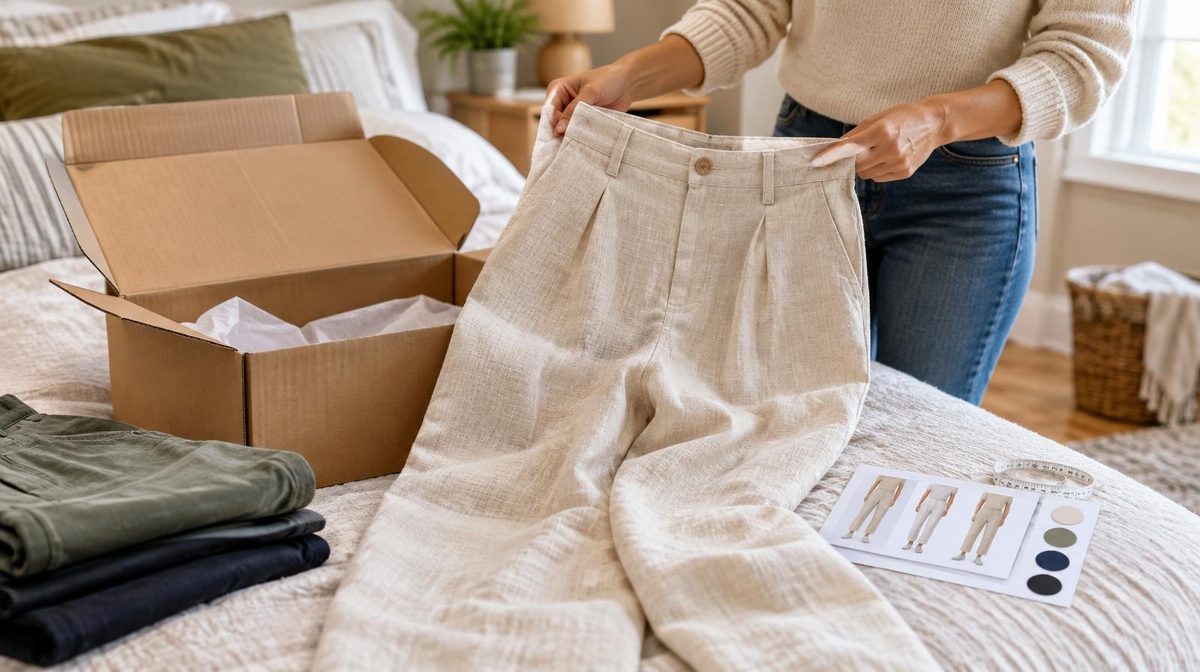
Maya sells high-waisted linen pants for $39. After product cost, the referral fee and FBA, she keeps $18.87 per pair. That's a 48% break-even ACoS, so she set a comfortable 35% target and let her campaigns run.
The dashboard looked great all summer. ACoS sat at 33%. Sales were up. Her bank balance was not.
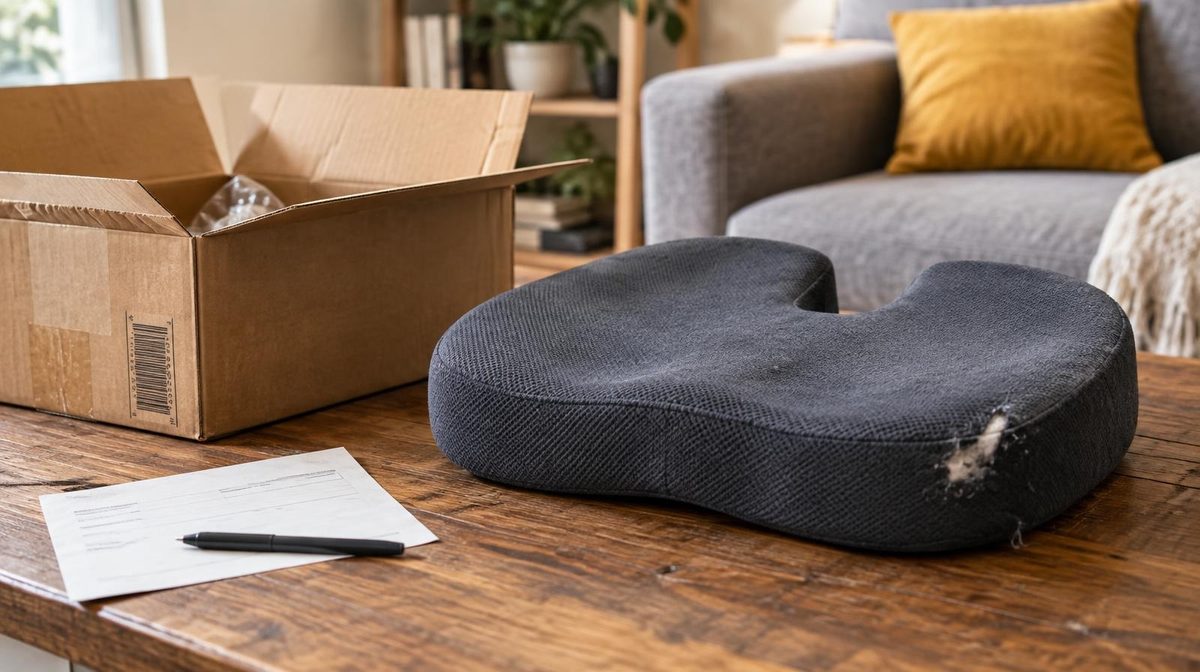
One in four pairs came back. The wrong size, the wrong length, "fabric thinner than expected." The advertising console never subtracted those returns. Every ad sale it reported was counted the day it was ordered, not the day it was kept. Once Maya ran the numbers with returns in them, her real break-even was 30%. She had been paying for profit she never got.
That's the trap at the center of Amazon PPC for clothing. In most categories, a sale is a sale. In apparel, a sale is a maybe. This guide shows how to calculate a break-even ACoS that includes returns, which sizes and colors to advertise, how to build keywords around the way people actually shop for clothes, and how to lift conversion before you raise a single bid.
Why Amazon PPC for Clothing Works Differently
Most PPC advice is written for products that ship once and stay shipped. Clothing breaks that in five ways.
- Returns are part of the business model. Fit is a guess until the shopper tries the item on. Return rates of 15% to 30% are common in apparel, far above most hard-goods categories.
- Every product is a variation family. One style can have 6 sizes and 8 colors, which means 48 child ASINs. You don't advertise all of them equally, and you shouldn't.
- Shoppers search by attribute, not by product name. Nobody types your brand on day one. They type "women's linen pants high waisted wide leg" or "merino base layer men midweight."
- The image does the selling. Conversion depends on the main image, the color swatches, the size chart and fit reviews more than on bullet points.
- Demand moves with the season and the calendar. Swimwear peaks in spring, base layers in autumn, gift-friendly items like pajamas and sweaters in November and December.
The first point changes your math. The other four change how you build and run campaigns. Start with the math.
The Math: Return-Adjusted Break-Even ACoS
Normal break-even ACoS is your margin before ad spend divided by your price. For Maya:
- Price: $39.00
- Product cost: $9.00
- Referral fee (17% for clothing above $20): $6.63
- FBA fulfillment fee: $4.50
- Margin before ads: $18.87
- Break-even ACoS: 18.87 ÷ 39 = 48.4%
That number assumes every order is kept. Now add returns.
When a pair comes back, Maya refunds the $39. Amazon returns most of the referral fee but keeps a refund administration fee (about $1.33 here). The FBA fee is gone. Amazon may also charge a returns processing fee on ASINs whose return rate is above the category threshold. And some returns come back worn or damaged and can't be resold. Add it up and each return costs her about $9.60, on top of losing the sale.
Here is the formula:
Return-adjusted break-even ACoS = [(1 − R) × margin − R × cost per return] ÷ price
R is your return rate for orders from ads.
With a 25% return rate:
- Kept orders: 0.75 × $18.87 = $14.15
- Cost of returns: 0.25 × $9.60 = $2.40
- Profit per order before ads: $11.75
- Return-adjusted break-even ACoS: 11.75 ÷ 39 = 30.1%
That's 18 points lower than the number on Maya's spreadsheet. Her 35% target was underwater on every single ad sale.
The advertising console doesn't net out returns from attributed sales, so you have to build them into the target yourself. Our guide to good ACoS benchmarks covers the single-order version of the target math. This is the apparel version.
Where to Get Your Return Rate
- Voice of the Customer and the returns report in Seller Central. These show return rates and return reasons per ASIN. Look at the child level, not just the parent. Size 2XL might return at 40% while Medium returns at 12%.
- Your FBA customer returns report. Download it monthly and group by reason. "Too small," "too large" and "not as described" each point to a different fix.
- Settlement data. If you want to see how much returns actually cost you in fees, your settlement reports show refund administration fees and returns processing fees line by line.
Our Amazon returns management guide walks through each report and how to cut return rates at the source.
Decide Which Sizes and Colors to Advertise
Tom sells merino wool base layers. One men's top, five sizes, eight colors: 40 child ASINs. His auto campaign advertised all of them. Spend spread evenly across colors that sold twice a month and sizes that were out of stock half the time.
When he looked at the child-ASIN data, three colors (black, charcoal, navy) in sizes M, L and XL drove 70% of his sales. Those nine children were also his best-stocked and lowest-returning. He rebuilt his campaigns around them and his ACoS dropped from 41% to 27% in six weeks, with more total sales.
Here's how to choose:
- Advertise the children with the best sales history and the deepest stock. A shopper who clicks your ad can still switch to another size or color on the detail page, because the whole family is shown there.
- Avoid advertising children that stock out. An out-of-stock child can't serve ads, and a size that's frequently missing creates frustrated clicks that don't convert.
- Check return rate per child. If one size runs small and returns at 35%, fix the size chart before you push traffic to it.
- Use color for creative, not for coverage. One or two best-selling colors in the main ad is enough. Let the swatches on the listing do the rest.
If your variation family itself is messy (wrong parent, orphaned children, missing size attributes), fix that first. Our guide to Amazon product variations covers the setup.
💡 Daniks.AI Advantage: Daniks.AI manages bids against a target ACoS for each campaign. Set your return-adjusted target once and the system holds it, moving spend toward the targets and search terms that convert, 24/7.
Build Keywords Around Fit, Fabric and Occasion
Clothing search is driven by attributes. Shoppers stack them: garment + gender + fit + material + occasion + season. Your keyword structure should follow the same logic.
| Attribute | Example terms | How to use it |
|---|---|---|
| Garment + gender | women's linen pants, men's base layer top | Phrase match core campaigns |
| Fit / cut | high waisted, wide leg, slim fit, relaxed | Exact match when it matches your product |
| Material | linen, merino wool, organic cotton | Exact and phrase; high intent, often lower CPC |
| Occasion / use | work pants, hiking base layer, beach cover up | Separate ad groups, different conversion rates |
| Season | summer, winter, thermal | Raise and lower bids with the calendar |
| Size range | plus size, petite, tall | Only if you actually carry those sizes |
A practical setup:
- Exact match on the attribute combinations that describe your product precisely, like "high waisted linen pants women."
- Phrase match on the garment root ("linen pants") to discover new combinations.
- An auto campaign with a modest budget to find terms you missed, then move winners to exact. Our Amazon PPC keyword research guide covers the harvesting process.
Apparel Negatives You Need on Day One
Clothing has more irrelevant traffic than almost any category, because the same garment words show up across genders, ages and uses. Start with:
- Wrong gender or age: "men's" on a women's product, "kids," "girls," "boys," "toddler."
- Sizes you don't carry: "plus size," "petite," "tall," "maternity."
- Wrong use: "costume," "uniform," "scrubs," "dance" (unless you sell them).
- Wrong material: "polyester" or "cotton" on a linen product, if your search term report shows they don't convert.
- Other brands: competitor brand terms that send expensive clicks with no conversions.
Review your search term report weekly and add negatives as the data comes in. The Amazon negative keywords guide explains when to use negative exact versus negative phrase.
Let the Visuals Sell: Formats That Work for Apparel
Sponsored Products should carry most of your budget, because it captures shoppers with a specific item in mind. But clothing is visual, and the other formats earn their place.
- Sponsored Brands with a custom image or lifestyle shot. Show the garment being worn. This is your chance to sell the look, not just the item.
- Sponsored Brands video. A 15-second clip of the fabric moving or the fit from three angles answers the question a still image can't. Our Sponsored Brands video ads guide covers specs and editing.
- Sponsored Display retargeting. Apparel shoppers browse many listings before buying. Retargeting the people who viewed your listing and left is cheap and converts well.
Keep claims in your ads simple and true. Amazon's advertising policies reject creative with unsupported claims, and "100% organic" or "waterproof" needs to be accurate and backed up.
Fix Conversion Before You Raise Bids
A higher bid on a weak listing buys more clicks that don't convert. In apparel, these fixes usually do more than any bid change.
Main image and swatches. A clean main image on white, plus on-model images that show fit from the front, side and back. Make sure every color swatch has its own images.
Size chart. Measurements in both inches and centimeters, a "how to measure" image, and a clear note if the item runs small or large. This is the cheapest return-rate fix you have.
Fit language in bullets. "Runs true to size. If you're between sizes, size up for a relaxed fit." It sounds small. It cuts "too small" returns.
Reviews about fit. Amazon surfaces fit feedback on many apparel listings. If reviews say "runs small," either fix the product or the size chart, then let new reviews build.
Price and coupon. Clothing shoppers compare prices across similar styles on the same results page. A visible coupon often lifts click-through and conversion more than a bid increase.
Priya sells flannel pajama sets. Her conversion rate was 6%, while the category was running closer to 10%. She added a size chart with measurements, two on-model images and a "runs slightly large" note in the first bullet. Conversion climbed to 9%, and her return rate fell from 22% to 15%. Same bids, lower ACoS, fewer returns. Our Amazon conversion rate optimization guide has the full checklist.
Plan Around the Season and the Gift Calendar
Clothing demand is predictable. Use that.
- Launch seasonal styles 6 to 8 weeks before peak. Ads need time to collect data and build ranking before the rush. Our seasonal products PPC guide has a full timeline.
- Raise budgets for gift items in November and December. Pajamas, sweaters, socks and base layers become gifts. Gift buyers don't know the recipient's exact size, so expect higher return rates in January and set your target with that in mind.
- Cut bids as the season ends. Late-season clicks convert, but often at clearance prices that shrink your margin. Recalculate your break-even at the discounted price.
- Judge results after the attribution window closes. Ad sales keep getting credited for 7 to 14 days after the click. The Amazon PPC attribution window explains how long to wait before you judge a campaign.
Pro Tip: Calculate two break-even ACoS numbers for gift items: one for October with your normal return rate, and one for December with a holiday return rate 5 to 10 points higher. Set your December target from the second number.
7 Mistakes in Amazon Advertising for Clothing Brands
- Setting targets from the margin without returns. Your real break-even is lower than you think, often by 10 to 20 points.
- Advertising every child ASIN. Spend spreads across slow colors and out-of-stock sizes.
- Ignoring return rate by size. One badly sized child can pull down the whole family's profit.
- Bidding on broad garment terms only. "Dress" or "pants" is expensive and vague. The attribute combinations convert.
- Skipping gender, age and size negatives. Kids, men's and plus-size searches eat budget on products that don't fit them.
- Raising bids on a listing with a weak size chart. You pay more to sell items that come back.
- Judging gift-season campaigns in December. Many returns don't arrive until January. Wait for them before you decide what worked.
FAQ: Amazon PPC for Clothing
What is a good ACoS for clothing on Amazon?
It depends on your margin and return rate. Many apparel sellers have a first-order break-even of 40% to 50%, but after returns the real break-even is often 25% to 35%. Calculate your return-adjusted number and set your target below it.
Does Amazon's ad console subtract returns from sales?
No. Attributed sales in the advertising console are counted when the order is placed. Returns show up in your Seller Central reports, not in your ad metrics. Build your return rate into your ACoS target.
Should I advertise the parent ASIN or the child ASINs?
You advertise child ASINs. Pick the sizes and colors with the strongest sales, best stock and lowest return rate. Shoppers can still choose any variation on the detail page.
Is Amazon PPC worth it for clothing brands?
Yes, if your margins can absorb returns. Clothing search is very attribute-driven, so a good keyword structure finds high-intent shoppers at reasonable costs. The sellers who struggle are the ones who set targets without counting returns.
How much should I spend on Amazon PPC for clothing?
Start with a daily budget that buys at least 10 to 15 clicks per ad group, so you get data fast. Scale budget on campaigns that beat your return-adjusted target. Our Amazon PPC budget strategy guide explains how to size it.
Which ad types work best for apparel?
Sponsored Products for most of the budget, Sponsored Brands video to show fit and movement, and Sponsored Display to retarget shoppers who browsed your listing.
Conclusion
Amazon PPC for clothing comes down to one idea: bid on the sales that stay sold. Count returns in your break-even ACoS. Advertise the sizes and colors that sell and stay in stock. Build keywords around fit, fabric and occasion, and block the genders, ages and sizes you don't carry. Fix the size chart before you raise a bid.
Maya rebuilt her targets around a 30% return-adjusted break-even, cut the two sizes that returned most, and rewrote her size chart. Her ACoS on the dashboard went up a little. Her profit went up a lot.
If you want your target held across every campaign without daily bid work, Daniks.AI does that on autopilot.
Ready to run your apparel ads on autopilot?
Set a return-adjusted ACoS target and let Daniks.AI manage bids, keywords and negatives 24/7 across every campaign.
Start Your Free 14-Day Trial14-day free trial · Cancel anytime