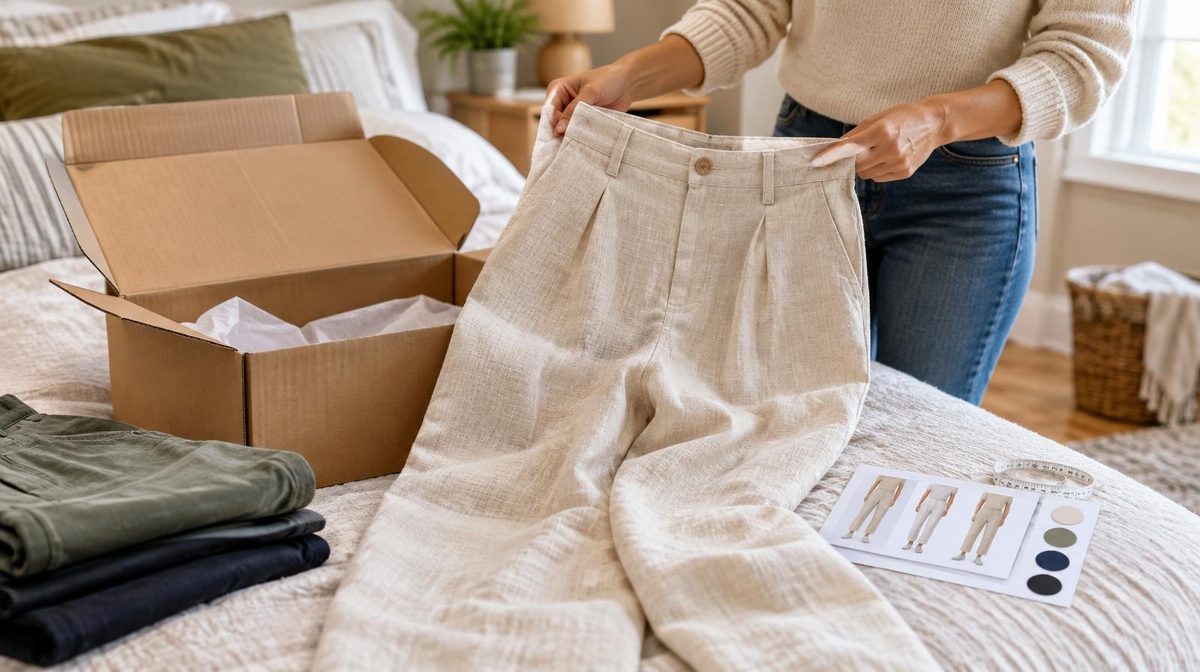
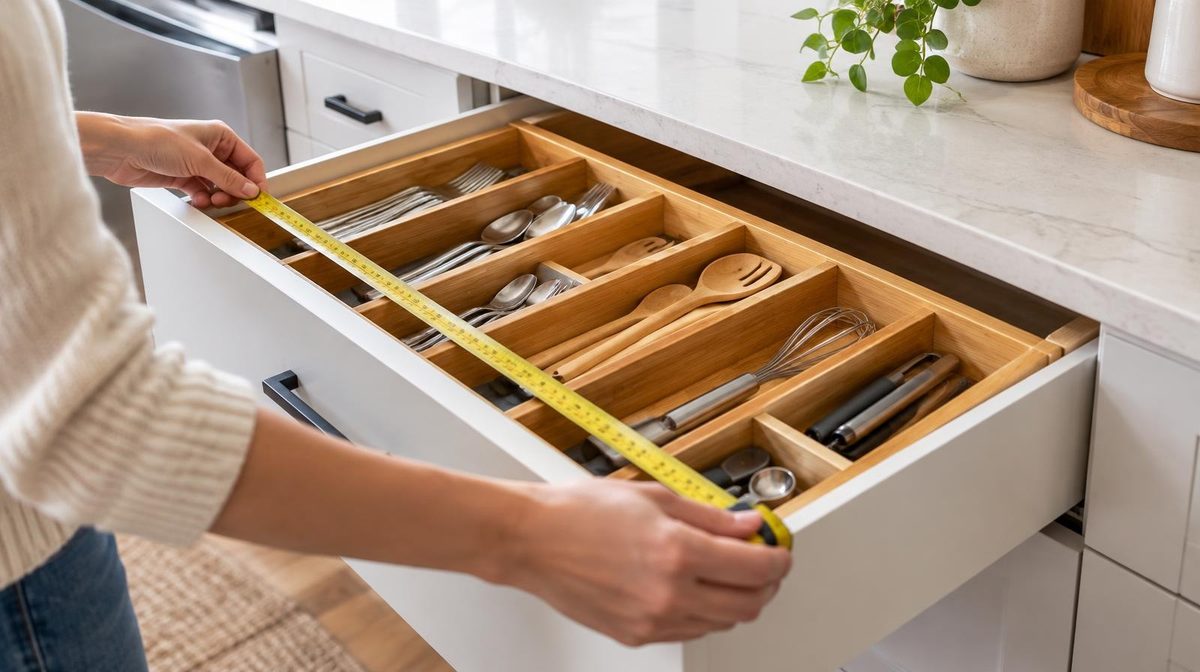
Marcus sells a $34 bamboo drawer organizer, 15 inches wide and expandable to 22. In October he bid on "drawer organizer," "kitchen drawer organizer" and "utensil organizer." The campaign spent $1,900 in a month at 44% ACoS.
The search term report was full of near misses: "drawer organizer 12 inch," "drawer organizer for deep drawers," "acrylic drawer organizer," "drawer organizer for makeup." Some of those shoppers bought and sent the tray back a week later. His return reason report said "didn't fit" 41 times.
The organizer was good. The ads were sending it to drawers it could never fit.
That is the core problem in Amazon PPC for home and kitchen. The shopper is not buying a product category. They are buying something that fits a specific drawer, counter, pot, bed or appliance. When your keywords, negatives and listing say exactly what it fits, clicks convert and orders stay sold. When they don't, you pay twice: once for the click and again for the return. This guide covers the fit-spec keyword ladder, the negatives that block the wrong sizes and models, ACoS targets by product type, complement targeting, the home and kitchen calendar and the claims rules that can stop your ads.
Why Amazon PPC for Home and Kitchen Is Different
Home & Kitchen is one of Amazon's largest categories by listing count, and its ad auctions behave in a few predictable ways.
- Fit decides relevance. A 6-quart and an 8-quart pressure cooker lid are different products. So are a full and a queen fitted sheet, or a 30-inch and a 36-inch range hood. Broad terms mix them all together.
- Shoppers search by spec. "Queen sheets deep pocket 18 inch," "air fryer liners 8 inch square," "shelf liner 12 inch x 20 ft." The number in the search is the buying signal.
- Returns follow bad fit. "Too small," "too big" and "doesn't fit my model" are the most common return reasons in the category. Every one of those orders looked like a win in your ad report.
- Three economic models share one category. A $249 stand mixer, a $14 pack of filters and a $9 replacement gasket need completely different ACoS targets.
- Style and material split the audience. "Farmhouse," "modern," "stainless," "glass," "bamboo." A shopper who types one rarely buys the other.
- Claims are regulated. Words like "antibacterial," "non-toxic" and "BPA-free" carry legal meaning, and ads that use them loosely can be rejected.
The first three points are where most home and kitchen budgets leak.
The Fit-Spec Keyword Ladder
Generic category terms like "kitchen gadgets" or "home decor" have huge volume and weak conversion. The profitable searches sit lower down, where the shopper tells you what they need it to fit. Build each product's keyword list as a ladder.
| Rung | What it adds | Example | Typical role |
|---|---|---|---|
| 1. Product type | The category | "drawer organizer" | Discovery, low bids |
| 2. Size or capacity | The fit | "drawer organizer 15 inch" | Core, highest relevance |
| 3. Material or finish | The look and feel | "bamboo drawer organizer" | Core, style match |
| 4. Room or use | Where it goes | "kitchen utensil drawer organizer" | Core, intent |
| 5. Compatibility | What it works with | "lid for instant pot 6 qt" | High conversion, small volume |
| 6. Style | The design taste | "farmhouse drawer organizer" | Secondary, gift and decor shoppers |
Rung 1 is where money disappears. Rungs 2 to 5 are where it comes back. "Drawer organizer" gets far more searches than "drawer organizer 15 inch expandable," but almost every shopper on the longer phrase has measured their drawer.
Practical rules for the ladder:
- Cover every size you actually sell. If a variation family has 12, 15 and 18 inch trays, each size needs its own exact-match terms pointing to the right child ASIN. Our product variations guide explains how to advertise the right child.
- Write numbers the way shoppers write them. "15 inch," "15in," "15 x 20," "6 qt," "6 quart," "6qt" are all real searches. Let auto and broad campaigns find the variants, then move the winners to exact match.
- Compatibility terms deserve their own ad group. "For Ninja air fryer" or "for KitchenAid 5 qt" converts at very high rates when it is true. Keep these separate so you can bid them up without raising the whole campaign.
- Material beats adjectives. "Stainless steel" and "glass" filter shoppers better than "premium" or "durable," which nobody types.
For the research method behind the ladder, see our guide to Amazon PPC keyword research.
Pro Tip: Put the key dimension or capacity in the first 80 characters of your title, and make the main image show scale (a hand, a standard plate, a measuring tape). On mobile the ad shows only the start of the title. If the size is there, the wrong shoppers skip you for free.
Block Wrong Sizes and Models With Negatives
Marcus's 15-to-22-inch organizer was showing on 12-inch and deep-drawer searches. Those clicks either didn't buy or bought and returned. Both cost him money.
Build a fit negative list for every product:
- Sizes you don't make: specific numbers outside your range ("12 inch," "10 qt," "king" if you only sell queen). Use negative phrase match so "12 inch drawer organizer" and "drawer organizer 12 inch wide" are both blocked.
- Models you don't fit: if your lid fits 6-quart models only, block "8 qt," "3 qt" and "mini." If your filter fits one brand, block the others.
- Materials you don't use: "acrylic," "plastic," "metal," "glass," "wood." A bamboo shopper and an acrylic shopper are different people.
- Wrong room or use: "makeup," "office," "garage," "bathroom," "RV," when your product is built for the kitchen.
- Parts and services: "replacement parts," "repair," "manual," "warranty," unless you sell them.
Add these at the campaign level and review search terms weekly. Our Amazon negative keywords guide covers match types and how to avoid blocking terms that do convert.
After three weeks with fit negatives and the width in the title, Marcus's ACoS dropped from 44% to 29%. His "didn't fit" returns fell from 41 a month to 12. Ad sales went down 6%, and net sales after returns went up.
Set ACoS Targets by Product Type
One ACoS target across a home and kitchen catalog will be wrong for most of it. Start from break-even ACoS for each product: price minus fees, cost of goods and shipping, divided by price. Then adjust for how the product earns money.
| Product type | Typical price | Repeat purchase | Starting target |
|---|---|---|---|
| Small appliances, cookware sets | $60-$300 | Rare | Below break-even, reviews and images first |
| Organizers, decor, bedding | $20-$60 | Occasional | Near break-even, minus your return rate |
| Consumables (filters, liners, refills) | $10-$25 | Yes, every 1-3 months | Above first-order break-even with real reorder data |
| Replacement parts (gaskets, lids, blades) | $8-$30 | Sometimes | Tight, exact and compatibility terms only |
Two adjustments matter in this category.
Returns. Bulky and fit-sensitive items come back more often than most. Ad reports count the sale on the order day, not after the return window. Take each product's return rate from the last 90 days and lower its break-even ACoS by about that share. A rug with a 32% break-even and an 8% return rate should target closer to 29%.
Reorders. Consumables are the exception that can run hot. If 35% of air fryer liner buyers reorder within 90 days, the first sale is worth more than its order value. Measure this with TACoS and repeat-customer data, not a guess. Our guide to ACoS vs. TACoS shows how to read the two together.
Big-ticket items need a different approach to clicks, not just a lower target. Our guide to Amazon PPC for high-priced products covers longer consideration windows and why reviews matter more than bids above $100.
💡 Daniks.AI Advantage: Daniks.AI sets bids from the ACoS target you choose per product. Give your filters a higher target than your mixers, lower the target on a rug that gets returned often, and every keyword's bid follows without a spreadsheet.
Use Complement Targeting
Home and kitchen products rarely live alone. An air fryer needs liners. A coffee maker needs filters. A mattress needs a protector. A new apartment needs everything.
That makes product targeting unusually strong in this category. Target the product pages of the items your product goes with:
- Consumables on the appliance: liners on air fryer pages, filters on water pitcher and coffee maker pages, vacuum bags on vacuum pages.
- Accessories on the core item: sheet sets on mattress pages, lids and racks on pot pages, mats on dish rack pages.
- Upgrades on the cheap version: your $45 bamboo cutting board on $15 plastic board pages with lower ratings.
Priya sells silicone air fryer liners at $16 for a pack of three. Her keyword campaigns on "air fryer liners" ran at 38% ACoS against bigger brands. She then targeted the pages of 22 popular air fryer models her liners fit, with the model size in the ad group name. Those product targets brought 40% of her ad sales at 21% ACoS, and her repeat rate made them more profitable than any keyword.
Our guide to Amazon ASIN targeting explains how to pick and bid on these pages. One rule: only target models your product truly fits. A wrong-fit compatibility ad creates returns and bad reviews faster than any other mistake.
Plan Around the Home and Kitchen Calendar
Home and kitchen demand is steadier than toys or seasonal décor, but it still has clear peaks.
- November to December: kitchen gadgets, small appliances and cozy bedding are top gift categories. Raise budgets for Cyber Week and keep them high until your last delivery date. Our Q4 Amazon PPC strategy covers budgets and bids for this stretch.
- January: organization season. Storage, closet systems, labels and pantry containers spike as people start the year. Kitchen scales and meal-prep containers rise with diet resolutions.
- March to April: spring cleaning and outdoor living. Cleaning tools, storage and patio items climb.
- May to June: wedding registry and new homeowners. Cookware sets, knife sets and bedding do well.
- July to August: back to college. Dorm bedding, compact appliances and small-space storage peak. "Dorm" and "college" become strong modifiers.
Tomás sells a $59 two-slice compact toaster oven. He ran flat bids all year and wondered why August was his best month. When he added "dorm," "small apartment" and "compact" ad groups in mid-July and raised their bids for six weeks, his August ad sales rose 52% at the same ACoS. He paused the dorm group in September and moved that budget into gift terms for November.
Use Formats That Show Scale and Use
Home buyers worry about two things: will it fit, and will it work. Your ad formats should answer both.
- Sponsored Brands video. Show the product in a real room or on a real counter, with a hand or common object for scale. A 20-second clip of the organizer sliding into a drawer, or a pan releasing an egg, answers questions a photo can't. Our Sponsored Brands video guide covers specs and editing.
- Sponsored Brands with a Store page by room. If you sell across rooms, send traffic to a Store page organized as "Kitchen," "Bedroom," "Bathroom." Shoppers find the right fit in one tap.
- Sponsored Display remarketing. Bigger home purchases take several visits. Remarketing to recent viewers works well on items over $60, and reorder remarketing works for consumables 30 to 60 days after purchase.
Keep Home and Kitchen Claims Compliant
Claims that sound harmless in a listing can create policy problems in ads.
- Antimicrobial and antibacterial claims. In the US, claiming a product kills or protects against germs is a pesticide claim under EPA rules, even for cutting boards, sponges or bedding. Unless the product or its treatment is registered and the claim is limited to the item itself, ads with these claims can be rejected or the listing suppressed. The EPA pesticides site explains the rules for treated articles.
- "Non-toxic," "eco-friendly" and "green." Broad environmental claims need specific proof. The FTC Green Guides describe what substantiation looks like.
- Food-contact materials. "BPA-free" and "food-safe" should be backed by testing. Products sold in California may need a Proposition 65 warning.
- Electrical safety. Small appliances need the right certification for the marketplace, and Amazon can ask for documents at any time.
- Ad policy. Amazon's advertising policies restrict unsubstantiated superlatives and before-and-after claims. Keep headlines about real features: size, material, capacity, what it fits.
Common Amazon Home and Kitchen PPC Mistakes
- Bidding on category terms first. "Kitchen gadgets" and "home decor" should come after your size and compatibility terms hit their budget.
- No fit negatives. Wrong-size and wrong-model searches burn budget and create returns.
- One ACoS target for the whole catalog. Appliances, consumables and parts need different numbers.
- Advertising the parent, not the right child. Send "queen" traffic to the queen ASIN, not to whatever variation Amazon picks.
- Hiding the dimensions. If size isn't in the title and the first image, shoppers learn it after they pay.
- Ignoring the return report. "Didn't fit" returns are a keyword problem as often as a product problem.
- Loose germ and eco claims. They get ads rejected at the worst possible time.
Our Amazon PPC mistakes guide covers the account-wide errors that make each of these worse.
FAQ: Amazon PPC for Home and Kitchen
What is a good ACoS for home and kitchen products on Amazon?
It depends on margin and product type. Many home and kitchen sellers run between 20% and 35% ACoS. Start from each product's break-even ACoS, subtract its return rate, and allow consumables with proven reorders to run a little higher.
How do I stop ads showing for the wrong size?
Add sizes, capacities and models you don't sell as negative phrase match at the campaign level, put the key dimension in the first part of your title, and advertise each size variation with its own exact-match terms.
Should I advertise every variation of a home product?
Advertise the variations that sell and have stock. Map size-specific keywords to the matching child ASIN so a "king" search lands on the king listing.
Is product targeting worth it for kitchen products?
Yes, especially for accessories and consumables. Targeting the pages of appliances your product fits often beats keyword campaigns on ACoS, as long as the fit claim is accurate.
When should I raise home and kitchen ad budgets?
Raise them for Cyber Week through your last holiday delivery date, again in January for organization products, and in July and August for dorm and small-space items.
Can I say my product is antibacterial in ads?
Only if the claim meets EPA rules for the product and is limited to protecting the item itself. In most cases, describe the material instead ("non-porous silicone," "dishwasher safe") and avoid germ-killing claims.
Conclusion
Amazon PPC for home and kitchen rewards sellers who advertise the fit. The shopper has measured the drawer, checked the pot size or knows the mattress depth. When your keywords name that spec, your negatives block the sizes and models you don't serve and your targets match each product's economics, the same budget brings more orders that stay sold.
Start with your best seller this week. Build its fit-spec ladder, add size and model negatives, put the dimension in the title and set a target that accounts for returns. Marcus cut his ACoS from 44% to 29% and his "didn't fit" returns by more than two thirds without changing the product.
If you'd rather have bids, keyword harvesting and negatives run themselves across your whole catalog, try Daniks.AI free for 14 days. Set your ACoS target per product and the AI handles the daily work.
Ready to stop paying for clicks that don't fit?
Set your target ACoS per product and let Daniks.AI harvest keywords, add negatives and adjust bids 24/7.
Start Your Free 14-Day Trial14-day free trial · Cancel anytime