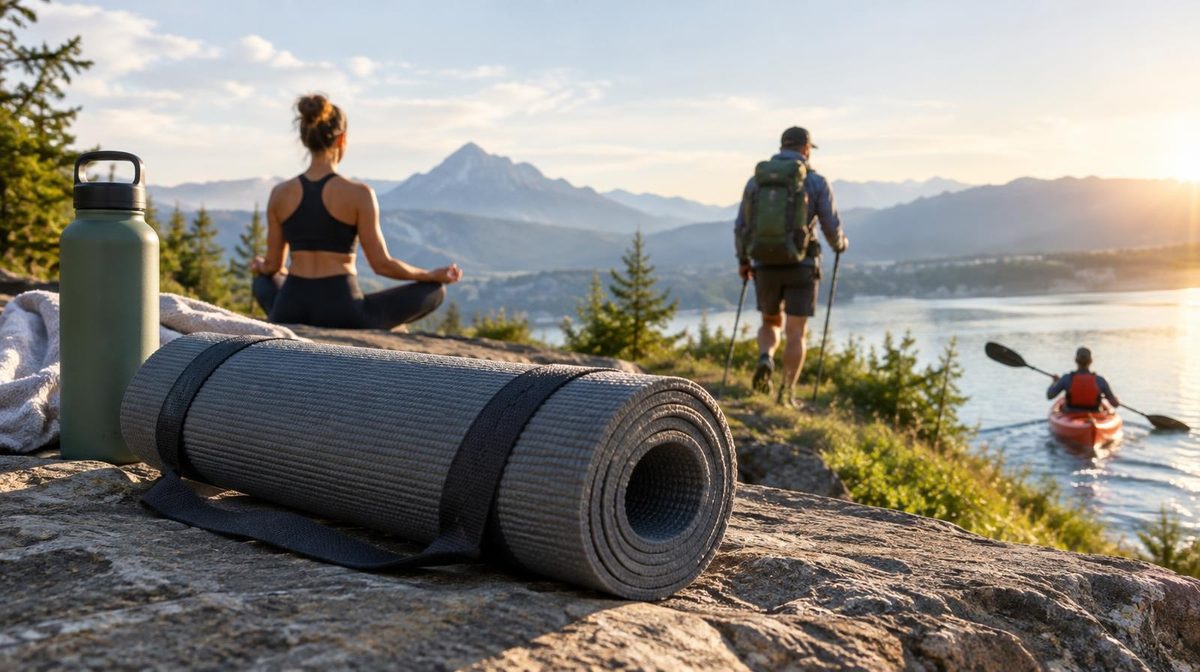
Tomás sells a $34 non-slip yoga mat, 6 mm thick. In October he bid on "exercise mat," "workout mat" and "gym mat." The campaign spent $1,900 that month at 52% ACoS.
His search term report was full of shoppers who wanted something else: "gym floor mats for home gym," "puzzle exercise mat," "treadmill mat," "kids gymnastics mat," "folding tumbling mat." Every one of them is an exercise mat. None of them is a yoga mat.
The mat was good. The ads were showing it to the wrong sport.
That is the core problem in Amazon PPC for sports and outdoors. The shopper is not buying gear. They are buying something for one activity, at one level, in one set of conditions: hot yoga, trail running in the rain, a first camping trip, a home gym in a spare bedroom. When your keywords, negatives and listing name that activity, clicks convert. When they don't, you pay for curiosity. This guide covers the activity keyword ladder, wrong-sport negatives, the season calendar by sport, ACoS targets for heavy and bulky gear, gift buyers in Q4, complementary targeting and the compliance rules that catch sporting goods sellers.
Why Amazon PPC for Sports and Outdoors Is Different
Sports and outdoors is one of Amazon's largest categories, and it behaves like a dozen small categories sharing one name.
- The activity decides relevance. A running shoe, a hiking shoe and a trail running shoe look similar to a broad match algorithm. To the shopper they are three different purchases.
- Every sport has its own season. Home fitness peaks in January. Camping peaks in June. Hunting peaks in October. One budget plan for the whole catalog will be wrong most of the year.
- Level changes the buyer. A beginner searches "camping hammock." An enthusiast searches "ultralight hammock 12 oz with bug net." They convert differently and compare differently.
- Heavy and bulky items carry big fees. Dumbbells, benches, kayaks and tents pay large FBA fulfillment and storage fees, so the break-even ACoS can be far lower than the price suggests.
- Many buyers are buying for someone else. In Q4 a large share of searches are gifts: "gifts for hikers," "fishing gifts for men," "stocking stuffers for runners."
Most wasted spend in this category comes from the first point. Most missed sales come from the second.
The Activity Keyword Ladder
Head terms like "exercise mat," "dumbbells" or "camping gear" have big volume, high CPCs and weak conversion. The profitable searches sit lower, where the shopper tells you the activity, the level and the conditions. Build each product's keyword list as a ladder.
| Rung | Example (yoga mat) | Example (camping hammock) | Typical role |
|---|---|---|---|
| Product type | yoga mat | camping hammock | Discovery, low bids |
| Activity | hot yoga mat, pilates mat | backpacking hammock | Core converting terms |
| Level | yoga mat for beginners | ultralight hammock | Splits beginners from enthusiasts |
| Spec | yoga mat 6mm thick non slip | hammock with bug net and rainfly | Highest conversion |
| Conditions | sweat proof yoga mat | 4 season hammock, cold weather hammock | Shoppers with a specific problem |
| User | yoga mat for women, extra long yoga mat for tall men | 2 person hammock | Fit and size intent |
| Gift | yoga gifts for women | gifts for campers | Seasonal, Q4 and Mother's/Father's Day |
Run the type rung in broad or phrase with modest bids to discover new searches. Put the activity, spec and condition rungs in exact match, where most of your budget should go. Our Amazon PPC keyword research guide explains how to fill each rung from auto campaigns and Brand Analytics.
Two rules make the ladder work:
- Match the rung to the listing. If your title says "6mm," the "6mm" searches convert. If the shopper searches "hot yoga mat" and your bullets never mention sweat or grip, the click is wasted. Put the activity and the key spec in the first 80 characters of the title.
- Map each variation to its own terms. "Yoga mat 8mm" should land on the 8mm child ASIN, not the 6mm one. Advertise the child that matches the search.
Wrong-Sport Negatives
Broad and auto campaigns in this category leak into neighboring activities. A yoga mat shows for gymnastics mats. A running shoe shows for hiking boots. A kayak paddle shows for paddle boards and pickleball paddles. These are the negative lists most sporting goods catalogs need:
- Neighboring activities: for a yoga mat: "gymnastics," "tumbling," "puzzle," "treadmill," "rubber," "tiles." For a pickleball paddle: "kayak," "canoe," "sup."
- Wrong level: if you sell beginner gear, "professional," "competition," "tournament" often bring buyers who want a different price tier. If you sell premium gear, "cheap" and "kids" usually do not convert.
- Wrong user: "kids," "youth," "toddler," "dog" (yes, dog life jackets and dog backpacks take a lot of clicks from human gear).
- Wrong conditions: a three-season tent does not want "winter tent" or "4 season." A road bike light does not want "mountain bike helmet light" unless it fits.
- Parts and repair searches: "replacement," "repair kit," "parts," "manual," unless you sell those.
Add them as negative phrase in broad and auto campaigns, and review the search term report every week during peak season. Our Amazon negative keywords guide shows how to find leaks by clicks and spend without blocking good traffic.
Tomás built his ladder and added 14 negatives. In four weeks his clicks fell 31%, his ad orders rose 8% and his ACoS dropped from 52% to 33%. He did not change the mat or the price.
Plan the Year by Sport, Not by Quarter
Every sport runs its own calendar, and the auction follows it. CPCs climb when demand climbs, but conversion climbs faster, so peak weeks are usually the most profitable weeks of the year. The mistake is to treat them like normal weeks: same budget, same bids, same inventory.
| Activity | Main peak (US) | Start ramping | Second bump |
|---|---|---|---|
| Home fitness, weights, yoga | Dec 26 to mid-February | Mid-December | September (back to routine) |
| Running and cycling | March to June | Late February | September races |
| Camping and hiking | April to August | March | Q4 gifting |
| Water sports and swimming | May to August | April | None |
| Fishing | March to June | February | September to October |
| Hunting | August to November | July | Q4 gifting |
| Winter sports | October to January | September | Presidents' Day sales |
| Team sports | Before each season (Feb for baseball, Aug for football and soccer) | Four weeks before | Q4 gifting |
Sellers in Australia, Brazil or South Africa flip the outdoor rows by six months. Check your own Business Reports and Google Trends for your exact product, because local weather and school calendars shift the curve.
How to run each peak:
- Four to six weeks before: check stock and FBA inbound times. A sold-out listing in week two of the peak loses its rank and its ad momentum.
- Two weeks before: raise bids 10-20% on the activity and spec rungs, and launch Sponsored Brands video.
- During the peak: raise daily budgets so campaigns never run out by the afternoon. Use budget rules with a date range so the increase starts and stops on its own.
- After the peak: step bids down over two weeks, not overnight. Keep exact match winners alive at lower bids all year so they keep their history.
Jake sells adjustable dumbbells at $249. Last January he kept his December budget of $120 a day. From December 26 to January 15 his main campaign ran out of budget before 1 PM every single day, while his best converting hours were between 6 PM and 10 PM, when people shop after work. He also ran out of stock on January 11 and waited 17 days for the next shipment. This year he sent inventory by December 8, set a budget rule for +80% from December 26 to January 20 and raised bids on "adjustable dumbbells for home gym" two weeks early.
For more on peak timing, read our guide to PPC for seasonal products.
Good ACoS for Sports and Outdoors: Set Targets by Product Type
There is no single good ACoS for sports and outdoors. A resistance band and a weight bench have different margins, fees and return rates. Start from break-even:
Break-even ACoS = (price − product cost − Amazon fees − returns cost) ÷ price
Then set the target below it. Jake's dumbbells show why heavy gear needs its own math:
- Price: $249
- Product cost and inbound freight: $104
- Referral fee (15%): $37
- FBA fulfillment fee for a 52 lb item: $31
- Returns and damage allowance: $9
- Profit before ads: $68, so break-even ACoS is 27%
At $249, many sellers assume they can run at 35% or 40%. At 35% ACoS Jake would lose about $19 on every ad order. Our Amazon FBA fees guide shows how to calculate the fee for oversize items.
| Product type | Examples | Starting target ACoS | Notes |
|---|---|---|---|
| Small accessories | resistance bands, grips, jump ropes, water bottles | 20-30% | Low price means low CPC ceiling; bundles help |
| Core private label gear | yoga mats, hammocks, camping lights, trekking poles | 25-35% | Main growth products; can run higher at launch |
| Heavy and bulky gear | dumbbells, benches, kayaks, large tents | 12-25% | Fees decide the ceiling; check break-even first |
| Technical enthusiast gear | ultralight shelters, GPS watches, fishing reels | 25-40% | Higher prices, long research, strong repeat brand loyalty |
| Branded wholesale | name-brand balls, shoes, rods | 8-15% | Thin margins and shared Buy Box |
These are starting points. If a product has a high return rate (shoes, apparel-like gear, inflatable products), lower the target by the cost of those returns. For high-ticket items, our guide to PPC for high-priced products covers longer attribution and lower conversion rates.
💡 Daniks.AI Advantage: Set a target ACoS for each product type and Daniks.AI adjusts bids every hour to hold it. When the January fitness spike or the spring camping season lifts conversion, the system spends more on the terms that pay and pulls back when the peak fades.
Gift Buyers: The Q4 Campaign Most Sporting Goods Sellers Miss
From Black Friday to about December 20, a large share of sports and outdoors searches come from people who do not do the sport themselves. They search "gifts for hikers," "golf gifts for men," "stocking stuffers for runners" and "camping gifts for dad." These shoppers don't know the specs. They want something that looks good, gets good reviews, arrives on time and fits a budget.
Priya sells a $45 camping hammock with straps. Her regular campaigns target backpackers who search by weight and features. Last year she built a separate gift campaign:
- Gift keywords in exact and phrase: "gifts for campers," "hiking gifts for men," "outdoor gifts for him," "camping gifts under 50."
- A coupon shown in search results, and "gift" language in the main image and bullets ("ready to hang in 2 minutes, makes a great gift").
- Higher bids from December 1 to 15, then down 40% after the last standard Prime delivery date for Christmas, because late buyers switch to gift cards.
The gift campaign spent $640 in December, sold $3,100 and ran at 21% ACoS, better than her core campaigns. It ran for three weeks and then stopped. Our Q4 PPC strategy covers the full Black Friday to New Year schedule.
Pro Tip: Repeat the gift campaign for Father's Day and graduation season. Outdoor and fitness gifts sell strongly in May and June, and the same keywords with "dad" and "grad" work again.
Complementary and Competitor Targeting
Sports and outdoors shoppers rarely buy one item. A tent buyer needs a sleeping pad. A kayak buyer needs a paddle and a dry bag. A dumbbell buyer needs a bench. That makes product targeting very effective in this category.
- Complementary targeting: target the product pages of items your product goes with. Tent pages for sleeping pads, kayak pages for dry bags, adjustable dumbbell pages for benches and mats. These shoppers have already bought into the activity.
- Competitor targeting: target competitors with weaker reviews, higher prices or long delivery times. In a seasonal peak, a competitor who runs out of stock leaves shoppers on a page with your ad on it.
- Category targeting with filters: target the category with a price range and star rating filter, so you appear next to products you can beat.
- Defend your own pages: target your own listings with your accessories, so the space on your pages shows your bench, not a competitor's.
Read our Amazon ASIN targeting guide for how to choose and bid on product targets.
Sponsored Brands Video: Show the Gear in Use
Sporting goods sell on how they work in real use: a mat that doesn't slip in a sweaty class, a tent that goes up in four minutes, a bottle that keeps ice for 24 hours. A 15 to 30 second Sponsored Brands video shows that faster than any bullet point.
- Show the product in use in the first two seconds: hands setting up, a person running, water pouring.
- Show one proof point per video, like setup time, weight or grip.
- Use the activity and spec keywords from your ladder, not the head terms.
- Make one video per activity if a product serves two (a mat for yoga and for floor exercises).
Video works best at the start of each peak, when shoppers are comparing options. Our Sponsored Brands video guide covers specs, placements and bidding.
Compliance: Rules That Catch Sporting Goods Sellers
Some sports and outdoors products sit in restricted or sensitive areas. Ads get rejected, and in some cases listings get removed.
- Weapons and accessories: firearms, ammunition, many firearm parts and some knives and crossbow items are restricted. Check Amazon's restricted products rules before you advertise hunting and tactical gear.
- Health and weight-loss claims: "burn fat fast," "lose 10 lbs in a month" or "cures back pain" will get fitness ads rejected under the Amazon Ads policy. Describe the use, not a medical result.
- Safety gear claims: bike helmets, life jackets and climbing gear must meet the safety standards for the marketplace. Don't claim a certification you cannot document.
- Batteries: e-bike, e-scooter and heated gear batteries go through dangerous goods review. Delays here can make you miss a whole season.
- Sun protection claims: "UPF 50+" on clothing and shade products needs testing you can show.
- Superlatives: "best," "#1" and "strongest" without proof are common rejection reasons.
Common Mistakes in Amazon PPC for Sports and Outdoors
- Bidding on the category, not the activity. "Exercise mat" and "camping gear" spend fast and convert slowly.
- No wrong-sport negatives. Neighboring activities take 20-40% of clicks in many broad campaigns.
- One budget plan for all products. A catalog with fitness and camping items needs two calendars.
- Running out of stock at the peak. The weeks you most need inventory are the weeks inbound shipping is slowest.
- Ignoring fees on heavy items. High prices hide low break-even ACoS for bulky gear.
- Cutting ads to zero in the off-season. You lose keyword history and pay more to restart. Keep the exact match winners on low bids.
- Mixing gift and enthusiast traffic. They want different images, copy and prices. Separate campaigns let you bid and measure each.
FAQ
What is a good ACoS for sports and outdoors products on Amazon?
Most sellers run between 15% and 35%, but the right number comes from each product's break-even ACoS. Small accessories and core private label gear can run 20-35%. Heavy and bulky items often need 12-25% because FBA fees are high. Branded wholesale products usually need 8-15%.
When should I increase my Amazon ad budget for fitness products?
Start raising bids and budgets in mid-December, and plan the biggest budget from December 26 to mid-February. Send inventory early in December so it arrives before the peak. September is a second, smaller fitness peak.
Should I advertise outdoor gear in the off-season?
Yes, at a lower level. Keep exact match campaigns for your best keywords running with lower bids and budgets. You keep keyword history and some sales, and you can scale faster when the season starts. Cut broad discovery and video spend the most.
How do I stop my ads showing for the wrong sport?
Read your search term report weekly and add negative phrase keywords for neighboring activities, wrong levels, wrong users and wrong conditions. Then make sure your title and bullets name the exact activity, so Amazon's relevance matches your keywords.
Is Sponsored Brands video worth it for sporting goods?
Usually yes. Video shows setup, grip, weight and real use, which are the things sporting goods shoppers want to see. It works best in the weeks before and during each peak.
Conclusion
Amazon PPC for sports and outdoors rewards sellers who advertise the activity, not the gear. The shopper knows the sport, their level and the conditions they will use it in. When your keywords name that activity, your negatives block the neighboring sports, your budget follows each sport's season and your targets respect heavy-item fees, the same spend brings more orders.
Start today with the product closest to its peak. For fitness products, that peak starts in four weeks. Build the activity ladder, add wrong-sport negatives, send inventory now and set a budget rule for December 26. Tomás cut his ACoS from 52% to 33% with the same mat. Jake plans to keep his campaigns live through every evening of January.
Ready to catch the January fitness rush on autopilot?
Set your target ACoS per product and let Daniks.AI harvest activity keywords, block wrong-sport clicks and adjust bids and budgets 24/7.
Start Your Free 14-Day Trial14-day free trial · Cancel anytime